Heat Treatment Basics【Quenching · Tempering · Annealing · Normalizing Explained】
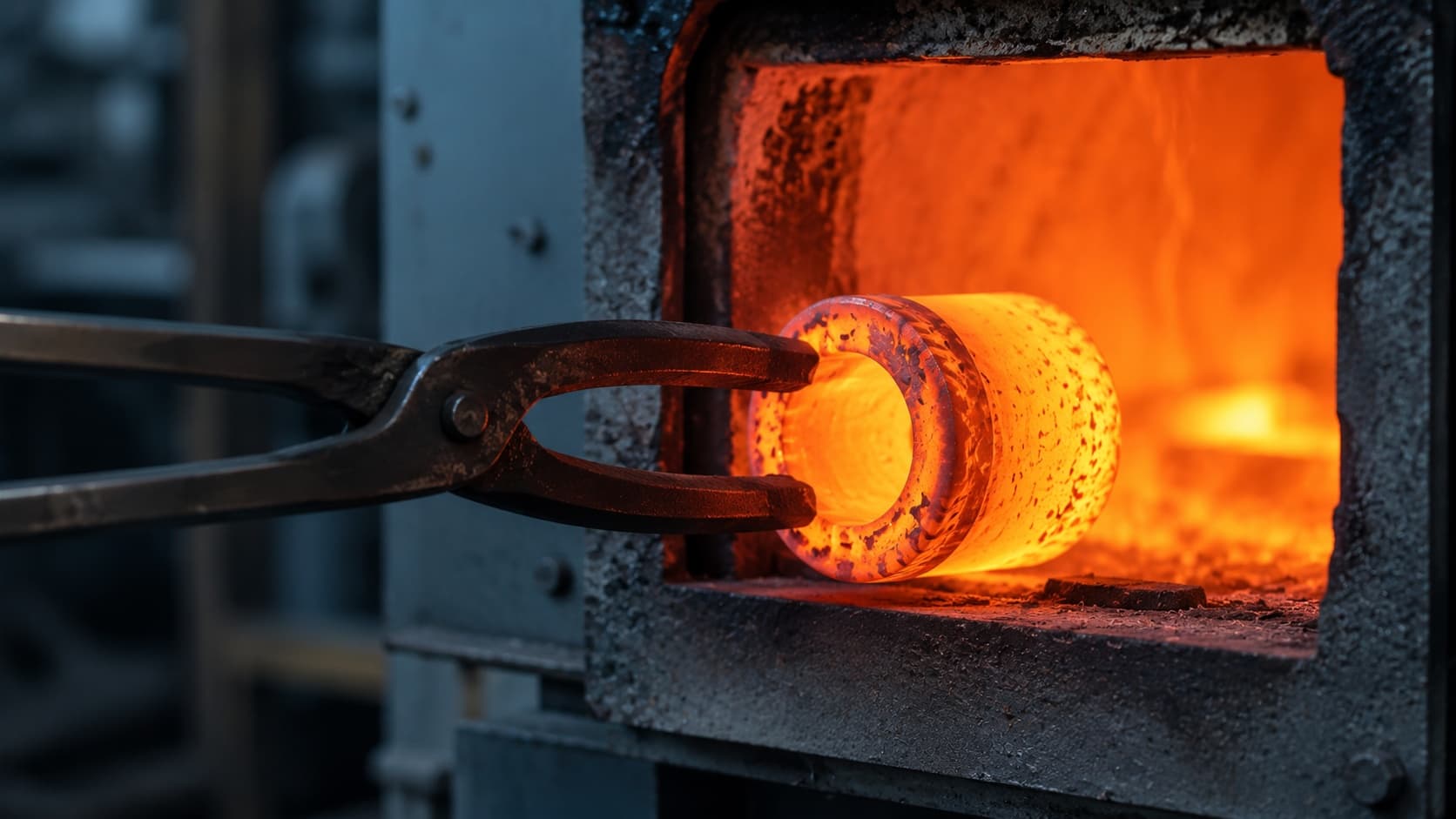
Heat treatment heats and cools steel to control its hardness, strength, toughness and machinability. The same material behaves very differently depending on the treatment, and it affects both the machining order and the dimensions (distortion). This guide covers the four basic treatments, hardness (HRC) guides, case hardening and the effect on machining — with diagrams.
The four basic heat treatments
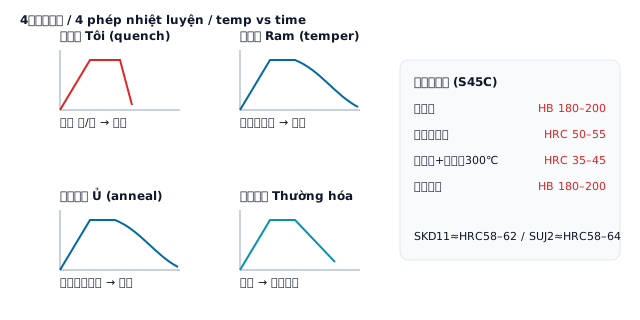
Fig. 1 — The heating and cooling rate decides the properties.
| Treatment | Cooling | Purpose |
|---|---|---|
| Quenching | Rapid cool (oil/water) from ~800–850°C | Form martensite → make it hard |
| Tempering | Reheat 150–650°C after quench, then cool | Restore toughness, remove brittleness |
| Annealing | Heat, then slow furnace cool | Soften, improve machinability, relieve stress |
| Normalizing | Heat, then air cool | Uniform structure, balanced mechanical properties |
Quenching and tempering almost always go together (as-quenched is brittle). The pair is sometimes called "refining" (調質).
Understanding hardness (HRC)
Hardness is mostly given in HRC (Rockwell C). A higher number is harder and more wear-resistant, but also more brittle and crack-prone.
| Steel | Use | Hardness after quench (guide) |
|---|---|---|
| S45C | Carbon structural steel | Quench-only HRC50–55 / temper 300°C → HRC35–45 |
| SK (carbon tool steel) | Blades, jigs | HRC58–63 |
| SKD11 | Cold-work die | HRC58–62 |
| SUJ2 | Bearings | HRC58–64 |
※ Guideline values that vary with conditions. Untreated S45C is about HB180–200.
Case hardening (tough core, hard surface only)
- Carburizing: add carbon to the surface of low-carbon steel, then quench. Hard surface, tough core. Gears, etc.
- Nitriding: diffuse nitrogen into the surface. Low distortion, high hardness.
- Induction hardening: induction-heat only the needed area and quench. Good for local hardening.
Effect on machining order · distortion
- Once hard, steel is hard to cut, so the basic order is rough machining → heat treatment → grinding to finish.
- Heating and rapid cooling cause distortion. Leave a grinding allowance on precision parts.
- After hardening, ordinary tools can't cut it — switch to grinding or EDM.
Common mistakes
- Using as-quenched parts and having them crack (tempering is essential).
- Trying to drill or tap after hardening and losing the tool.
- Not allowing for distortion and heat-treating at the finish size.
- Overlooking that a material isn't suited to hardening (low-carbon steel hardens poorly).
Frequently asked questions (FAQ)
Q. Isn't quenching alone enough? A. It's hard but brittle, so always temper to restore toughness. Adjust the final hardness via the tempering temperature.
Q. How hard does S45C get? A. Quench-only HRC50–55; temper at 300°C gives HRC35–45 (guide).
Q. Can aluminum be quenched? A. Not like steel. Aluminum is strengthened by precipitation (age) hardening (e.g., T6).
Q. How much does heat treatment distort a part? A. It depends on shape and material, but distortion always occurs. Leave a grinding allowance on precision parts.
Q. How do you machine hard materials? A. Grinding or EDM (wire/sinker). Cutting becomes difficult.
Summary
Heat treatment sets properties through "how fast you heat and cool." Quench plus temper balances hardness and toughness; annealing and normalizing improve machinability and structure. Because hardening drives distortion and machinability, design around the order rough → heat treat → grind to finish and allow for distortion.
Sontis Management centralizes materials, heat treatment and machining conditions and links quoting, orders and inspection. Try it on the free plan.
Manage quotes & inventory — free, starting today.
No credit card · 5 minutes to start. Management software for machine shops.
Start for free