3 Tips to Halve Machining Quote Time【For Small Shops · With a Worked Example】
"Quotes take too long" — a common headache at small shops taking on high-mix, low-volume work. Hand-calculating 30–60 minutes per quote caps the number of jobs you can even bid on. This article shares three tips to systematize quoting and halve the time — with a worked example.
Why quoting takes so long
- Building up costs (material, machining, setup) from scratch every time.
- Spending time searching for a similar past quote.
- Recalculating material weight on a calculator each time. Turn these three into a "system" and speed and accuracy rise together.
Tip 1: Split material, machining and setup costs into formulas
Quote variability usually comes from rounding "by gut." Just split the costs into formulas and anyone produces the same accuracy.
| Cost | How to calculate |
|---|---|
| Material | Weight × unit price (¥/kg) × quantity |
| Machining | Σ(quantity ÷ machining rate) × machine ¥/h |
| Setup | (setup time ÷ 60) × machine ¥/h (do not divide by quantity) |
Set each unit price once, and from then on you just enter dimensions and quantity to complete a quote.
Tip 2: Reuse past quotes for repeat parts
Same drawing number and customer? No need to rebuild from scratch. With a way to search and recall past quotes, a quote is done in seconds.
Key: auto-detecting past quotes by product code + customer makes repeat-job quote time nearly zero.
Tip 3: Automate material weight calculation
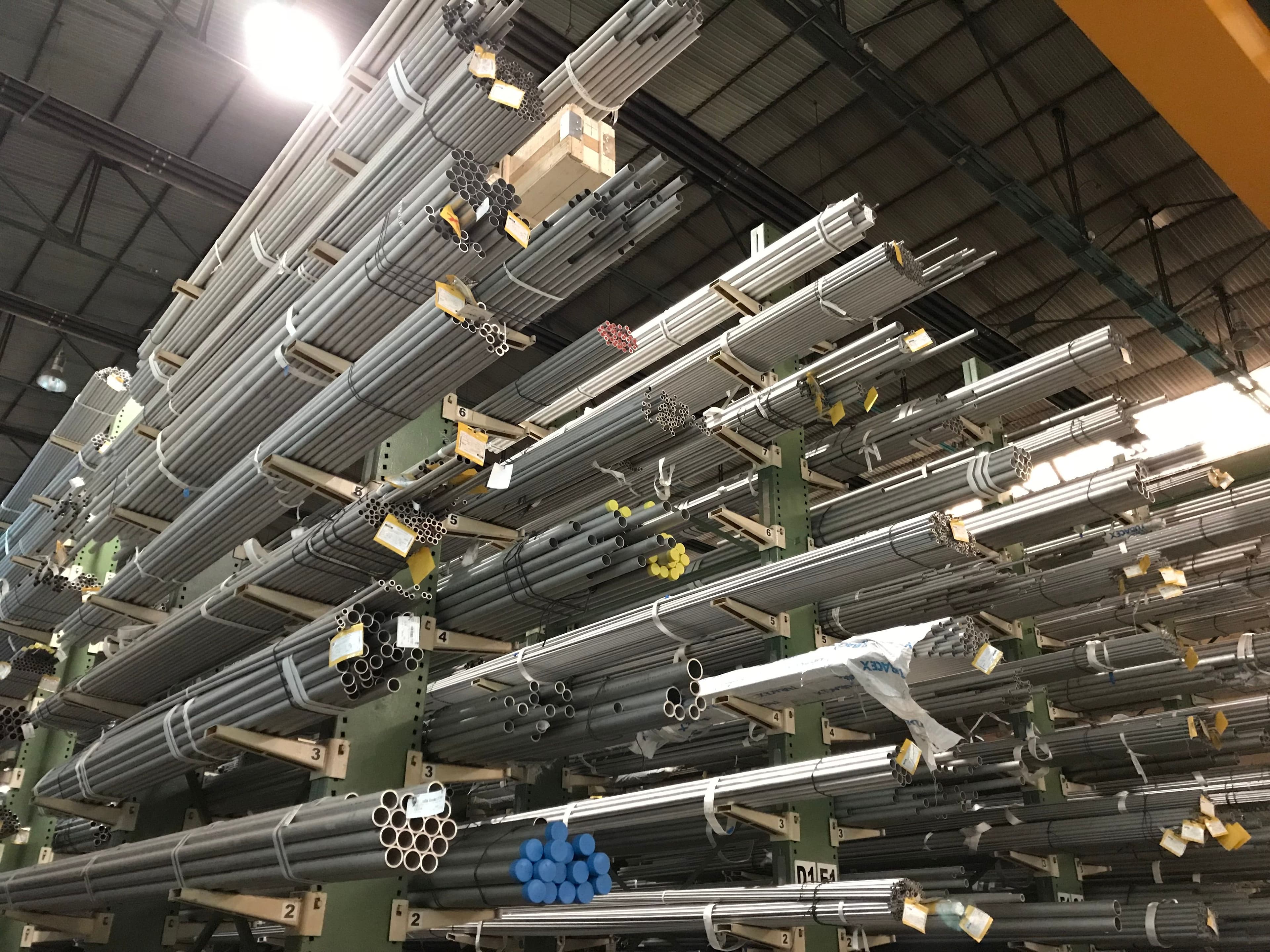
Round bar, hex bar, pipe — each shape has a fixed weight formula. Let a tool handle it, and entering dimensions gives you material cost in one step.
- Round bar: π × (D/2)² × L × density ÷ 10⁶
- Hex bar: 0.866 × W² × L × density ÷ 10⁶
- Pipe: π × (OD² − ID²) × L × density ÷ 10⁶
Register the density per material in advance, and SUS304 or brass calculate accurately with the same procedure.
A worked example
An S45C (density 7.85) round bar φ30 × 100mm long, 10 pieces, at ¥300/kg.
- Weight (per bar): π × (30/2)² × 100 × 7.85 ÷ 10⁶ ≈ 0.555 kg.
- Material cost: 0.555 × 300 × 10 pcs ≈ ¥1,665.
- Machining cost: add machine time × ¥/h from the machining rate.
- Setup cost: 30-min setup, machine ¥4,000/h → (30 ÷ 60) × 4,000 = ¥2,000 (once only, not divided by quantity).
With the costs as formulas, changing dimensions or quantity recalculates instantly.
Common quoting mistakes
- Dividing setup cost by quantity and losing money on small lots.
- Not allowing for yield (cut allowance, offcuts) and running short of material.
- Not separating density by material, throwing off the weight.
- Rebuilding repeat parts every time and wasting time.
Frequently asked questions (FAQ)
Q. Can speed and accuracy coexist? A. Yes. With costs as formulas you get "fast and the same accuracy every time," and avoid dependence on one person.
Q. Why not divide setup cost by quantity? A. Setup is a one-time task. Dividing by quantity makes small lots fall below cost.
Q. How do I handle material yield? A. Add cut allowance and clamping allowance to the material length, then compute weight. Underestimating causes shortages.
Q. How do I set the profit rate? A. Add it as a percentage on the total cost. Adjust by customer/difficulty, and typically don't expose the breakdown on the quote.
Summary
Quoting can shift from "thinking every time" to "producing by system." Just run these three — split the costs, reuse repeat parts, automate weight calculation — and quote time steadily approaches half, with stable accuracy.
Sontis Management builds all three tips in as standard features. Try it now on the free plan — no credit card required.
Manage quotes & inventory — free, starting today.
No credit card · 5 minutes to start. Management software for machine shops.
Start for free