Milling vs. Turning【Choosing the Process and Machine Types, Explained】
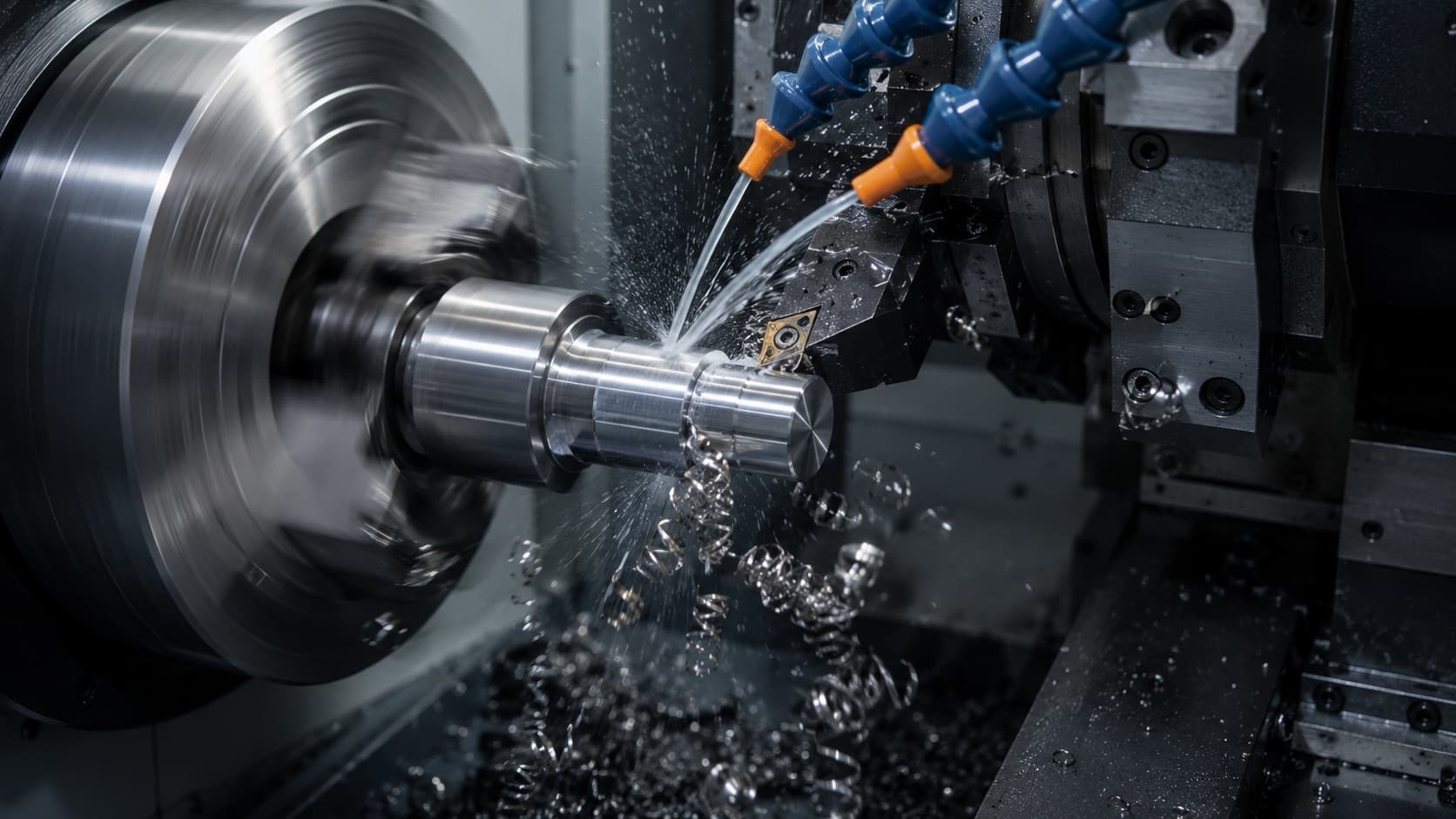
Milling and turning are the two basic cutting processes. Their biggest difference is what rotates. Grasp that one point and you can see which shape should be made on which machine. This guide covers the rotation difference, what each can do, machine types, how to choose, and cutting-condition basics — with a diagram.
What rotates is different
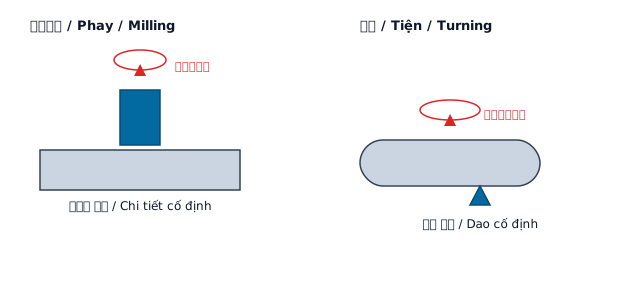
Fig. 1 — The rotating object is reversed. In milling, the tool (cutter) rotates and cuts a fixed workpiece. In turning, the workpiece rotates and a fixed tool (single-point) cuts it. So turning suits "round parts (bodies of revolution)," while milling suits "prismatic parts, slots and complex shapes."
What each can do
| Turning (workpiece rotates) | Milling (tool rotates) |
|---|---|
| OD / ID turning | Face and step cutting |
| Facing | Slots, keyways |
| Threading (external/internal) | Drilling, counterboring |
| Parting, tapers | Contours, pockets, complex shapes |
Machine types
- NC lathe: numerically controlled lathe. For volume and precision round parts.
- Machining center (MC): a milling machine with automatic tool change. The workhorse for prismatic/complex parts.
- Multitasking machine (turn + mill): one machine does both turning and milling, reducing setups.
How to choose
- Shafts, rings, bushings — bodies of revolution → lathe.
- Blocks, plates, housings, parts with many slots/holes → milling / MC.
- A round part with cross-holes, flats or slots → consider a multitasking machine or split "turn + MC" operations.
Cutting-condition basics
- Spindle speed (min⁻¹): derived from the cutting speed for the material and tool diameter.
- Feed: advance per revolution (or per tooth). Affects surface finish and tool life.
- Depth of cut: material removed per pass; reduce it in stages from rough to finish.
- For hard-to-cut or hardened materials, lower speed and feed and use coolant appropriately.
Common mistakes
- Forcing a round part into a mill and failing to hold roundness.
- Being unable to clamp a prismatic part on a lathe and struggling with setup.
- Not matching cutting conditions to the material and breaking or burning tools.
- Trying to cut hardened material (switch to grinding or EDM).
Frequently asked questions (FAQ)
Q. Which is more accurate? A. It depends on the job. Turning excels at concentricity/roundness of round parts; milling/MC at flatness and position.
Q. Which one for drilling? A. A center hole on a lathe; a hole at any position on a mill/MC. Choose by purpose.
Q. What's the benefit of a multitasking machine? A. Turning and milling in one chucking, reducing setups and datum shift.
Q. Where should a beginner start? A. Grasp the core idea (the rotation difference) and both connect. First practice choosing the machine from the shape.
Q. How do I set cutting conditions? A. Start from the material/tool maker's recommended cutting speed and feed, then adjust for machine rigidity and finish requirements.
Summary
The difference between milling and turning is "does the tool rotate or the workpiece?" Round parts go to the lathe; prismatic parts, slots and complex shapes to milling/MC; a multitasking machine combines both. Choose the machine from the shape and keep cutting conditions matched to the material — that's the first step of machining.
Sontis Management centralizes machines, machining conditions and quotes in one place. Try it on the free plan.
Manage quotes & inventory — free, starting today.
No credit card · 5 minutes to start. Management software for machine shops.
Start for free